Call US TODAY - 716-205-8089
Many people focus only on the lower back when pain starts.
But the source of the problem is not always in the back itself.
Tight hips can change the way the pelvis and lower spine move. Over time, this can place more stress on the lower back and contribute to stiffness, soreness, and recurring pain.
This does not mean tight hips are the cause of every back problem. But hip mobility is often worth checking when lower back pain keeps coming back.
The hips, pelvis, and lower spine work as one connected system.
When the hips move well, the lower back does not have to work as hard during walking, bending, lifting, or standing.
When hip movement becomes limited, the lower back may start to compensate.
This can lead to:

Sitting keeps the hips in a shortened position.
When this happens for hours each day, the muscles around the front of the hips can become stiff. The glutes may also become less active.
This can affect posture and change how the pelvis sits under the spine.
Many people notice this most when they stand up after sitting for a long time. The first few steps may feel stiff or uncomfortable.
If sitting also triggers leg symptoms, this article may help: Why Sitting All Day Can Trigger Sciatica.
Tight hips may be part of the problem if you notice:
These signs do not confirm the cause of pain. They simply suggest that hip movement may need to be checked.
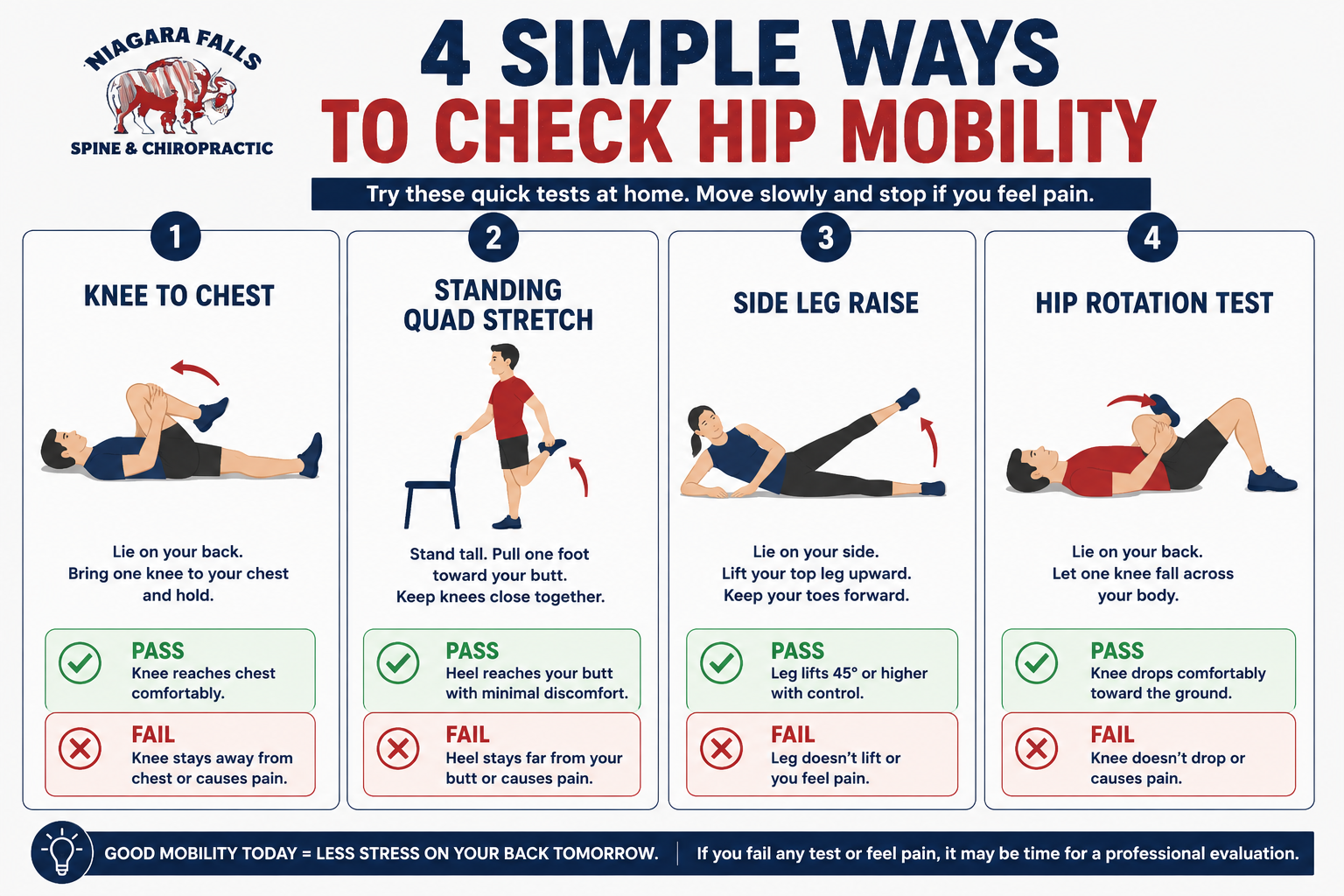
A few simple movements can help you notice whether your hips feel restricted.
These movements are not a diagnosis. They are only a basic way to compare comfort, motion, and side-to-side differences.
Examples include:
If one side feels much tighter, painful, or limited, it may be worth having your hip and lower back movement evaluated.
Sometimes tightness around the hips and pelvis can contribute to symptoms that feel similar to sciatica.
This may include pain into the buttock, tightness behind the thigh, or discomfort while standing and walking.
True sciatica often involves irritation of the sciatic nerve. That should be evaluated if symptoms continue, worsen, or travel down the leg.
Many people benefit from a mix of mobility work, strength work, and movement breaks.
Helpful changes may include:
The goal is not to stretch as much as possible. The hips need both mobility and strength to support the lower back.
Care depends on what is limiting movement and causing pain.
Some patients need lower back mobility work. Others need help with hip tension, posture, or pelvic movement.
Depending on the exam findings, care may include spinal manipulation, manual therapy, soft tissue work, mobility guidance, or posture recommendations.
If soft tissue tightness is part of the issue, instrument-assisted soft tissue massage may also be considered.
It may help to seek an evaluation if:
If pain continues for more than a short period, tightness elsewhere may also be involved. Can tight hamstrings cause lower back pain? looks at a related pattern.
At Niagara Falls Spine & Chiro, we evaluate how the hips, pelvis, and lower spine work together.
If tight hips or recurring lower back pain are affecting your daily life, an exam can help identify what may be contributing to the problem.



Niagara Falls Spine & Chiropractic
716-205-8089 • 2303 Pine Ave, Niagara Falls, NY 14301