Call US TODAY - 716-205-8089

If your lower back feels stiff, achy, or tight, the problem may not actually start in your back.
For many people, tight hamstrings can change the way the pelvis moves and increase stress on the structures of the lower spine. Over time, this altered movement pattern can contribute to recurring lower back pain, reduced mobility, and discomfort during daily activities.
The good news is that tight hamstrings are often identifiable and treatable. Understanding the relationship between the hamstrings, pelvis, and lower back can help explain why stretching, strengthening, and proper movement habits often play an important role in long-term relief.
The hamstrings are a group of three muscles located on the back of the thigh:
These muscles connect the pelvis to the lower leg and help bend the knee, extend the hip, and stabilize the body during movement.
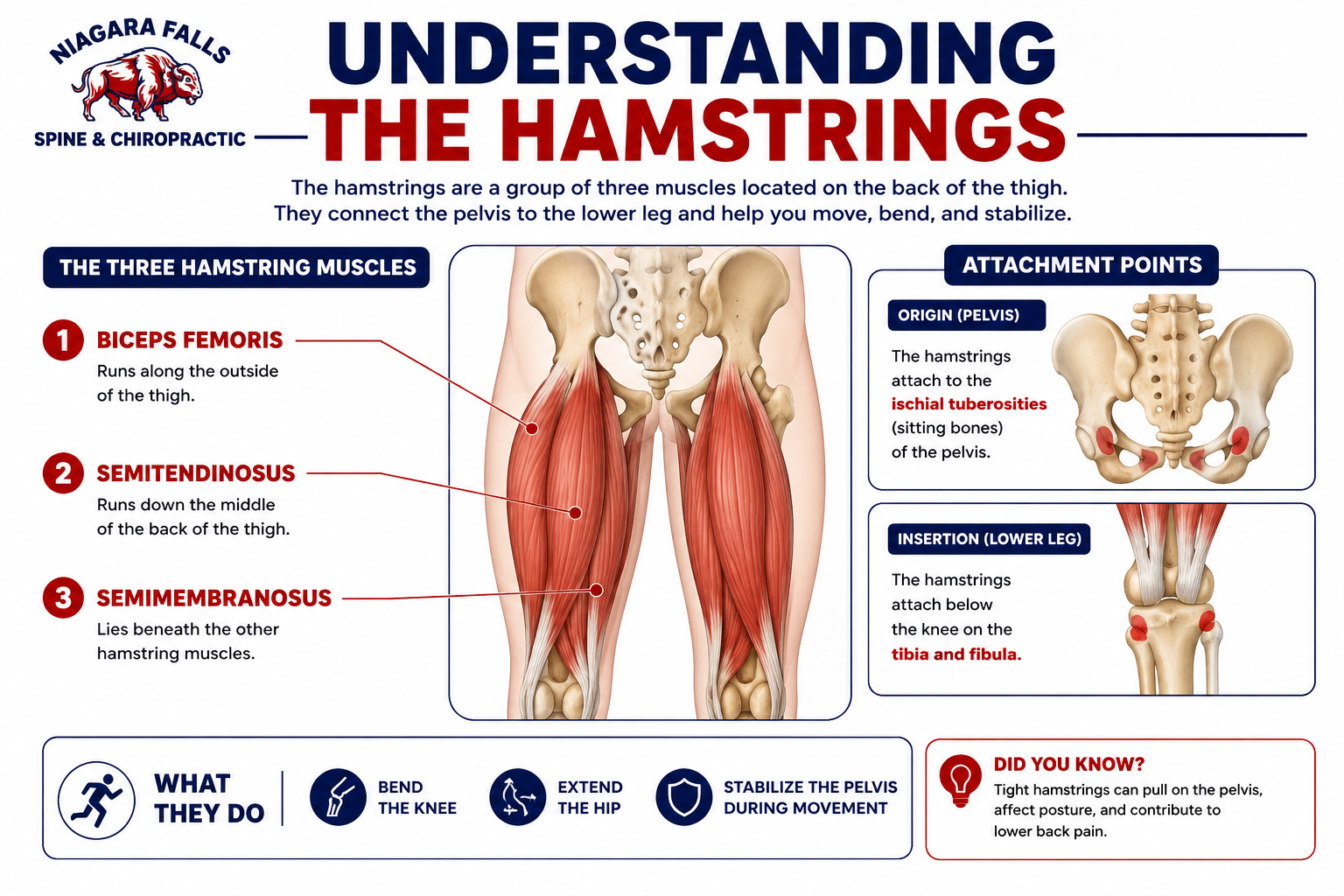
One of the most important relationships in the body is the connection between the hamstrings and the pelvis.
When hamstrings become excessively tight, they pull downward on the pelvis. This can create a movement pattern known as a posterior pelvic tilt, where the pelvis rotates backward.
As the pelvis rotates backward:
Think of the pelvis as the foundation of a house. When the foundation changes position, everything built on top of it must adapt.
The lower back and pelvis work together during nearly every movement.
When hamstring tightness limits pelvic motion, the spine may compensate by moving more than it should.
This compensation can contribute to stiffness, muscle fatigue, reduced mobility, and recurring pain.

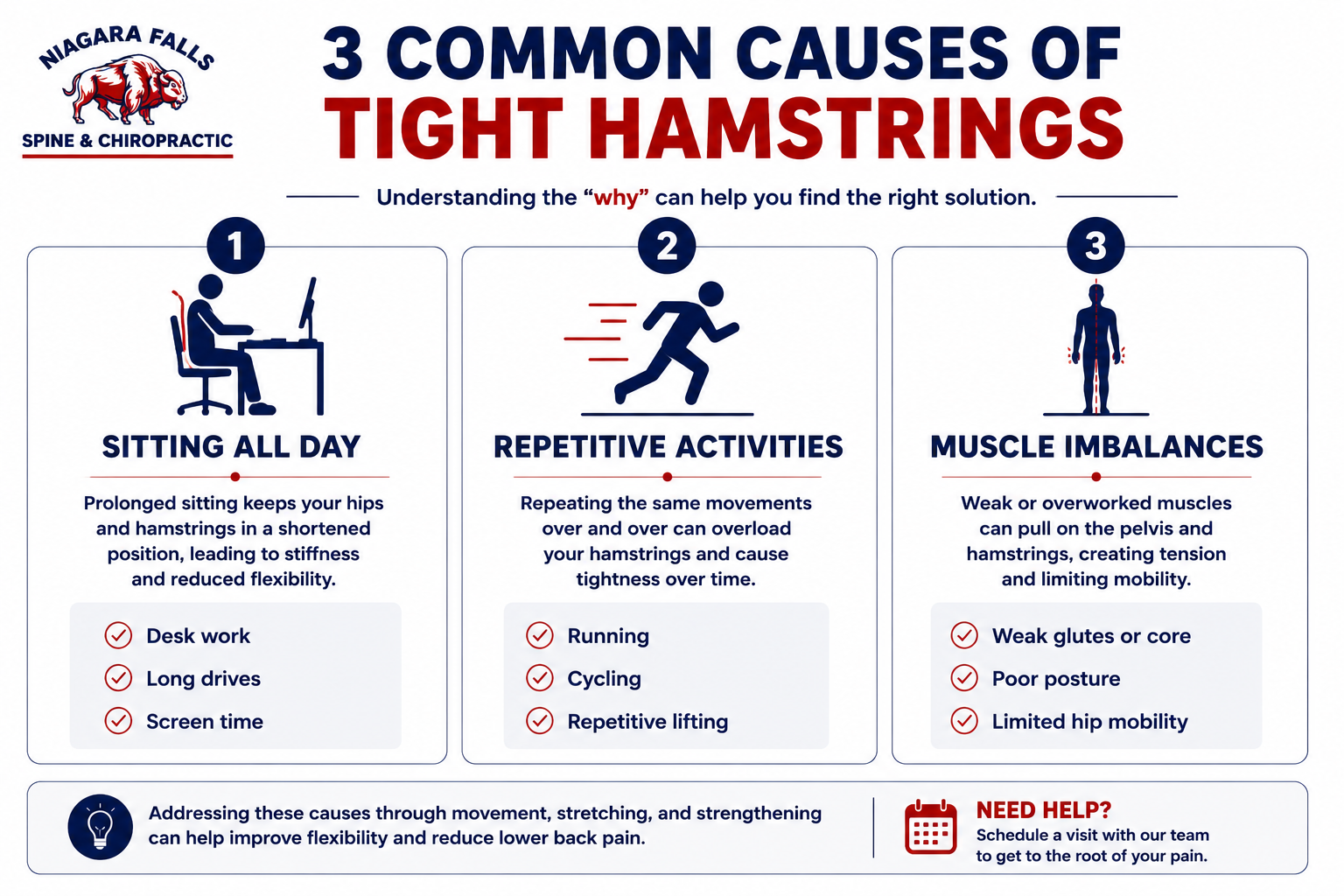
Several factors can contribute to hamstring tightness.
Extended sitting keeps the hips and knees flexed for hours at a time. Over time, this may reduce flexibility and contribute to stiffness. If sitting also causes leg symptoms, read Why Sitting All Day Can Trigger Sciatica.
Weak glutes and core muscles often force the hamstrings to take on extra stabilizing responsibilities.
Running, cycling, manual labor, and certain athletic activities can increase tension in the posterior chain.
Past strains or lower body injuries may leave lingering restrictions.
Some individuals also notice recurring back stiffness that temporarily improves after stretching or moving around.
Not necessarily.
Sometimes hamstrings feel tight because the hips are not moving properly, the core is weak, or the lower back itself is contributing to symptoms.
In some cases, what feels like hamstring tightness may actually be irritation of the sciatic nerve.
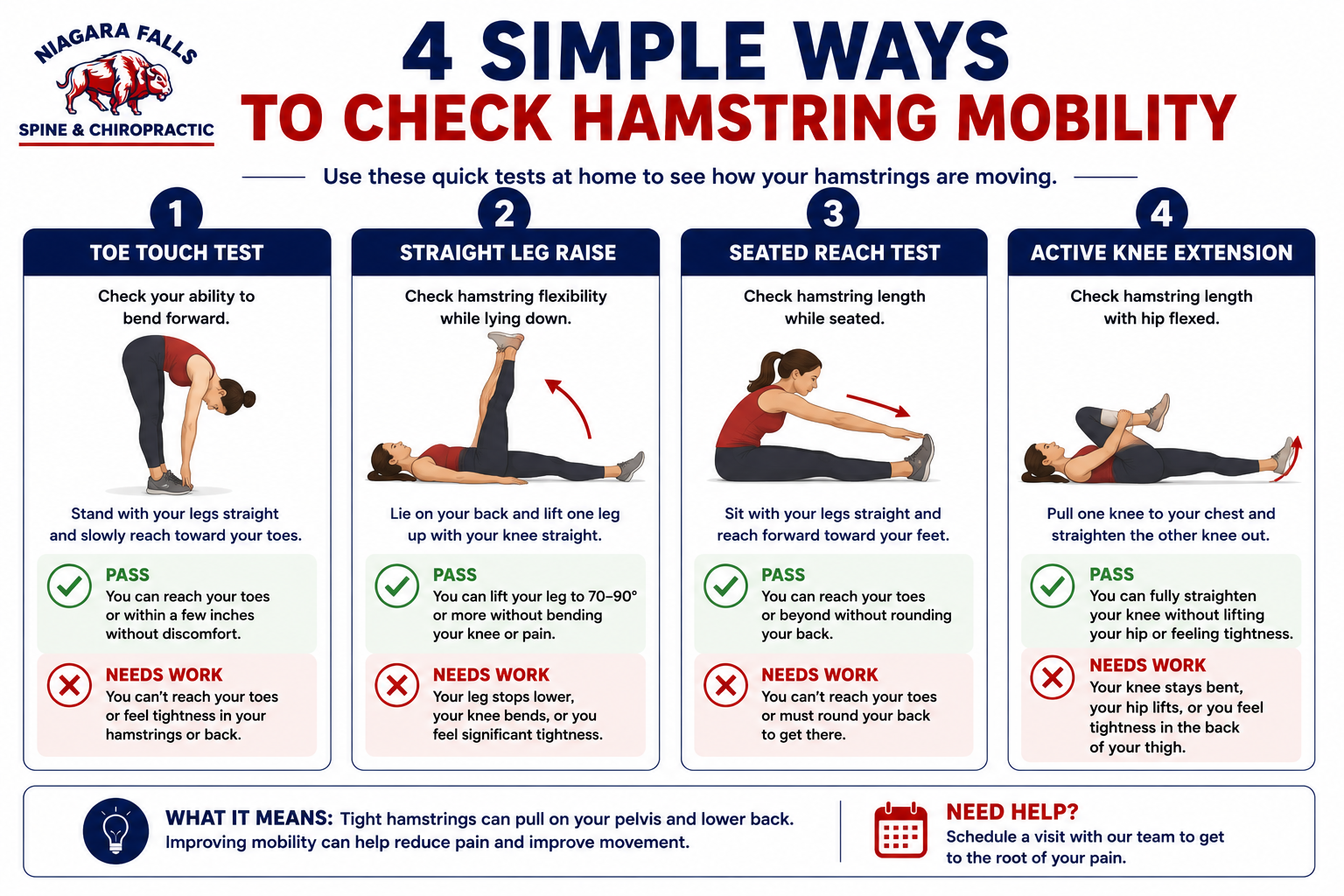
You do not need special equipment to get a general idea of your hamstring flexibility.
Stretching is often one part of improving flexibility and reducing tension.
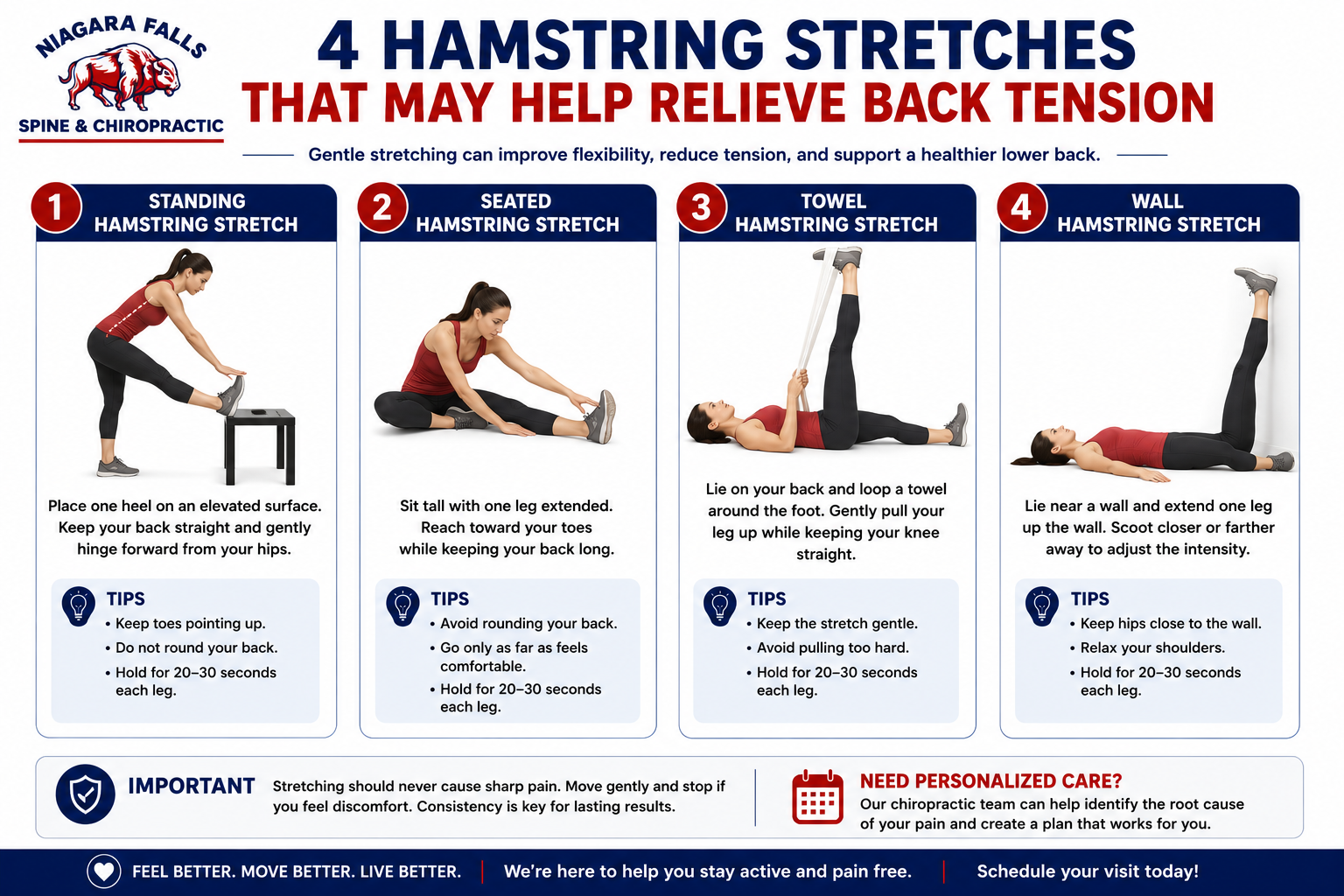
Stretching alone is not always enough.
Many people benefit from strengthening the glutes, core muscles, and hip stabilizers. These muscles help distribute forces more effectively and reduce the workload placed on the hamstrings.
People with restricted hip mobility may also benefit from addressing the issues discussed in Why Tight Hips Can Lead To Lower Back Pain.
Treatment may include spinal manipulation, manual therapy, movement recommendations, and other conservative approaches based on your examination findings.
Tight hamstrings can influence the position of the pelvis, change the way the lower back moves, and contribute to ongoing discomfort.
However, they are rarely the only factor involved.
If your lower back pain keeps returning despite your best efforts, a professional evaluation can help identify the underlying cause and develop a plan tailored to your needs.



Niagara Falls Spine & Chiropractic
716-205-8089 • 2303 Pine Ave, Niagara Falls, NY 14301