Call US TODAY - 716-205-8089

Most people walk away from a car accident, trade insurance details, and go home.
The decision about whether to get checked usually gets made that night, on the couch, based on how the neck and back feel in the moment.
That is a poor time to make it. Adrenaline is still high, swelling has not started, and muscle guarding takes hours to build.
This guide is about timing: what needs care the same day, what should be looked at within a few days, and what can reasonably be watched for a week. It is written for the ordinary collision, not the dramatic one. If you want to understand why symptoms show up late in the first place, start with our article on pain after a car accident.
Waiting is not always wrong. Waiting without a plan is.
The problem with simply seeing how you feel is that the first day gives you the least reliable information you will get all week.
A better approach is to decide in advance which symptoms would send you where, and then check yourself against that list each day for a week.

The same-day steps are simple and most of them are not medical.
The note about head position matters more than people expect. Being turned to check a mirror or talk to a passenger at the moment of impact changes which neck structures take the load.
These are not interchangeable, and the right one depends on what you are feeling rather than how bad the car looks.
A chiropractic evaluation is not a substitute for emergency care. It is the right next step once the emergency patterns have been ruled out and the problem is how your neck and back are moving.
These are uncommon after a low-speed collision. They are also not ones to sleep on.
Seatbelt bruising across the abdomen with pain that grows over hours needs to be checked for internal injury. That is not a chiropractic question.
This is the group most people fall into, and the group most likely to wait too long.
None of these are emergencies. All of them are easier to resolve when they are examined before guarding and stiffness settle in. Our guide on how to treat whiplash from a car accident covers what that early care looks like.
Some soreness after a collision is ordinary and does not need a visit.
The rule is direction. Mild and improving can be watched. Mild and flat after a week, or mild and spreading, should be looked at.
Knowing the normal pattern makes it easier to spot when yours is not following it.
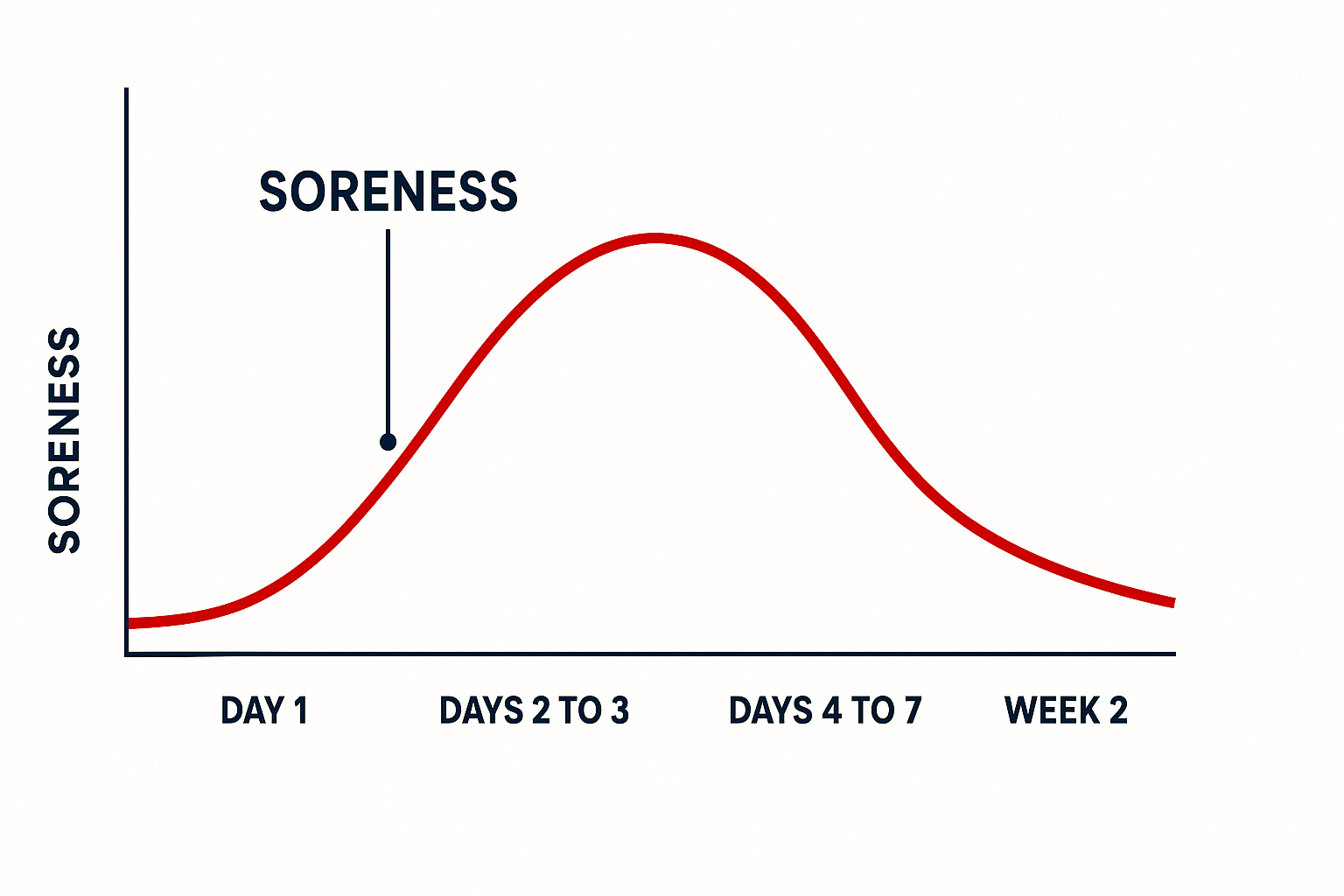
For a week-by-week view of neck recovery specifically, see how long whiplash lasts.
Vehicle damage is a poor measure of what happened to your neck.
Modern bumpers are built to absorb impact without crumpling at parking-lot speeds. The energy that does not bend the bumper is transferred to the occupants.
Factors that raise the load on the neck even in a slow crash:
Two of those apply to most rear-end collisions at a Niagara Falls Boulevard light.
New York is a no-fault state, which means your own auto policy generally covers medical care after a collision regardless of who caused it.
That coverage has a clock. The no-fault application is generally expected within 30 days of the accident, and care that begins long after the crash with no earlier record can be harder to connect to it.
Practical steps:
Deadlines and exceptions vary by policy, so confirm the specifics with your insurer. The point for your health is simpler: a documented evaluation early on protects both your recovery and your ability to have care covered.
The first visit is mostly examination, not treatment.
Care after that depends on the findings. It may include manual therapy for guarded muscles, gentle joint work such as spinal manipulation once the acute phase settles, and guidance on movement, sleep position, and return to work. More on how we approach this is on our whiplash page.
An honest answer is that some post-accident problems belong elsewhere first.
In those cases the right order is medical evaluation first, then conservative care for the neck and back once it is cleared.
If you have neck or back stiffness, headaches, or soreness that is worse on day two, within the first few days is reasonable. Earlier evaluation tends to mean a shorter recovery.
Go the same day if you lost consciousness, feel confused, have a severe headache, have chest or abdominal pain, or have numbness or weakness in your limbs. Otherwise, urgent care or a chiropractic evaluation within a few days usually fits.
Yes. Days two and three are commonly the worst as inflammation and muscle guarding build. What matters is whether it starts improving after that.
Chiropractic care is generally a covered service under New York no-fault, subject to the policy's limits and timely filing. Confirm the details with your insurer.
Mild and improving soreness can be watched. Pain that is flat or worsening after a week is worth examining, and waiting several weeks can make both recovery and insurance documentation harder.
At Niagara Falls Spine & Chiro, we examine how your neck and back are moving after a collision and screen for the problems that need other care first.
If you were in an accident in the past few days and your neck or back is stiff, sore, or not turning the way it should, an evaluation can tell you what is going on and what to do next.



Niagara Falls Spine & Chiropractic
716-205-8089 • 2303 Pine Ave, Niagara Falls, NY 14301