Call US TODAY - 716-205-8089

Whiplash symptoms may last anywhere from a few days to several months. Many mild cases improve within a few weeks, while more significant injuries can take two to three months or longer to settle.
Your recovery time depends on the force of the injury, the tissues involved, your health before the accident, and how your symptoms change afterward. Most people improve with time and appropriate care, but some develop persistent neck pain, headaches, stiffness, or dizziness.
Symptoms may not appear right away. You may feel fine immediately after a collision, then notice pain or stiffness later that day or the following morning.
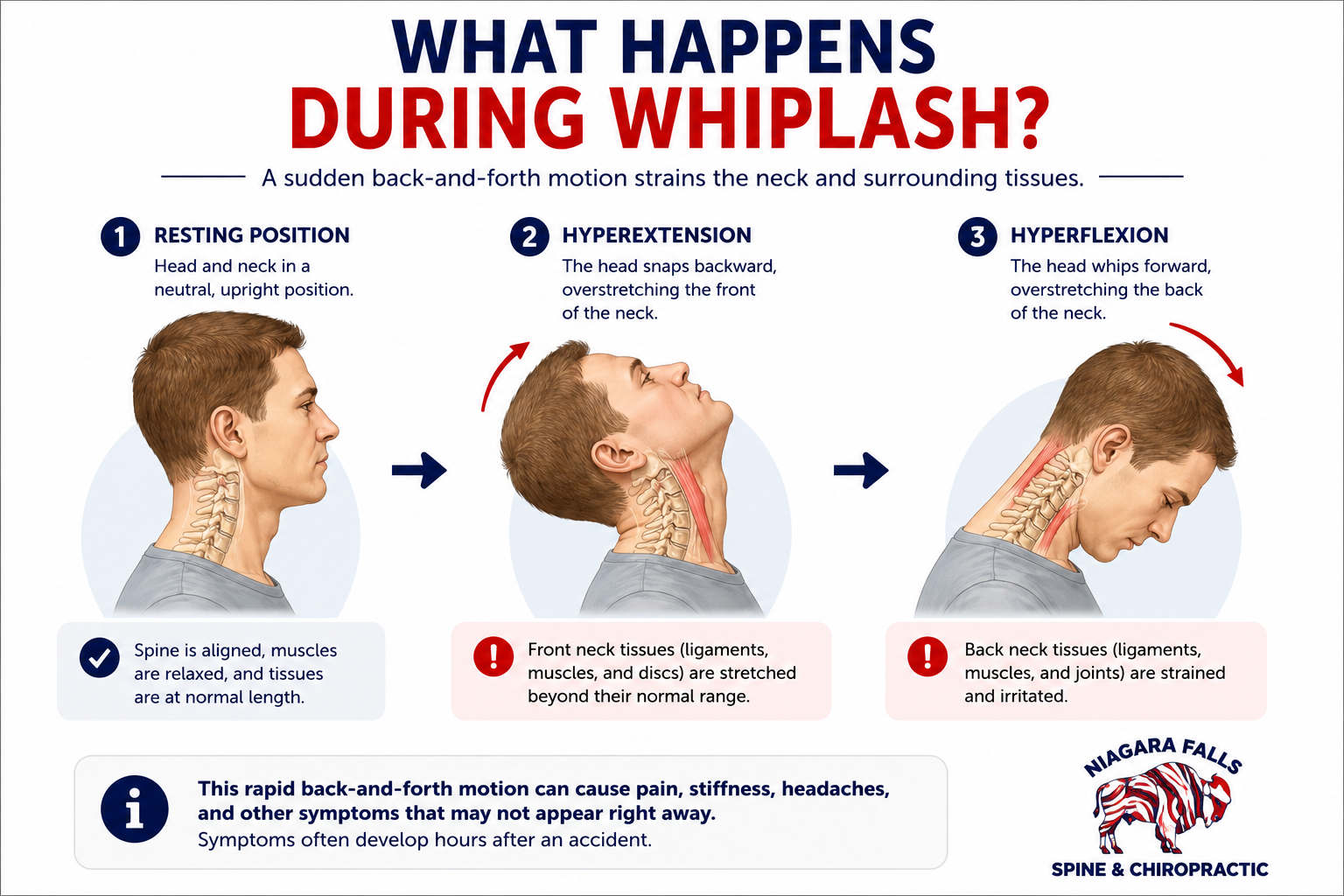
Whiplash is a neck injury caused by a fast back-and-forth movement of the head. This movement can strain muscles, ligaments, joints, and other soft tissues around the cervical spine.
Rear-end car accidents are a common cause, but whiplash can also happen during:
The injury does not always mean that a bone has broken or a disc has ruptured. Many cases involve irritated or overstretched soft tissue. However, a proper evaluation may be needed to rule out fractures, concussion, nerve irritation, or another injury.
A mild case of whiplash may improve within several days or a few weeks. More noticeable injuries often take several weeks to a few months.
There is no exact deadline for recovery. Two people involved in the same accident may have very different symptoms and healing times.
The following timeline shows how an uncomplicated whiplash injury may progress. It is not a promise or a diagnostic tool. Symptoms can improve faster, take longer, or change from day to day.
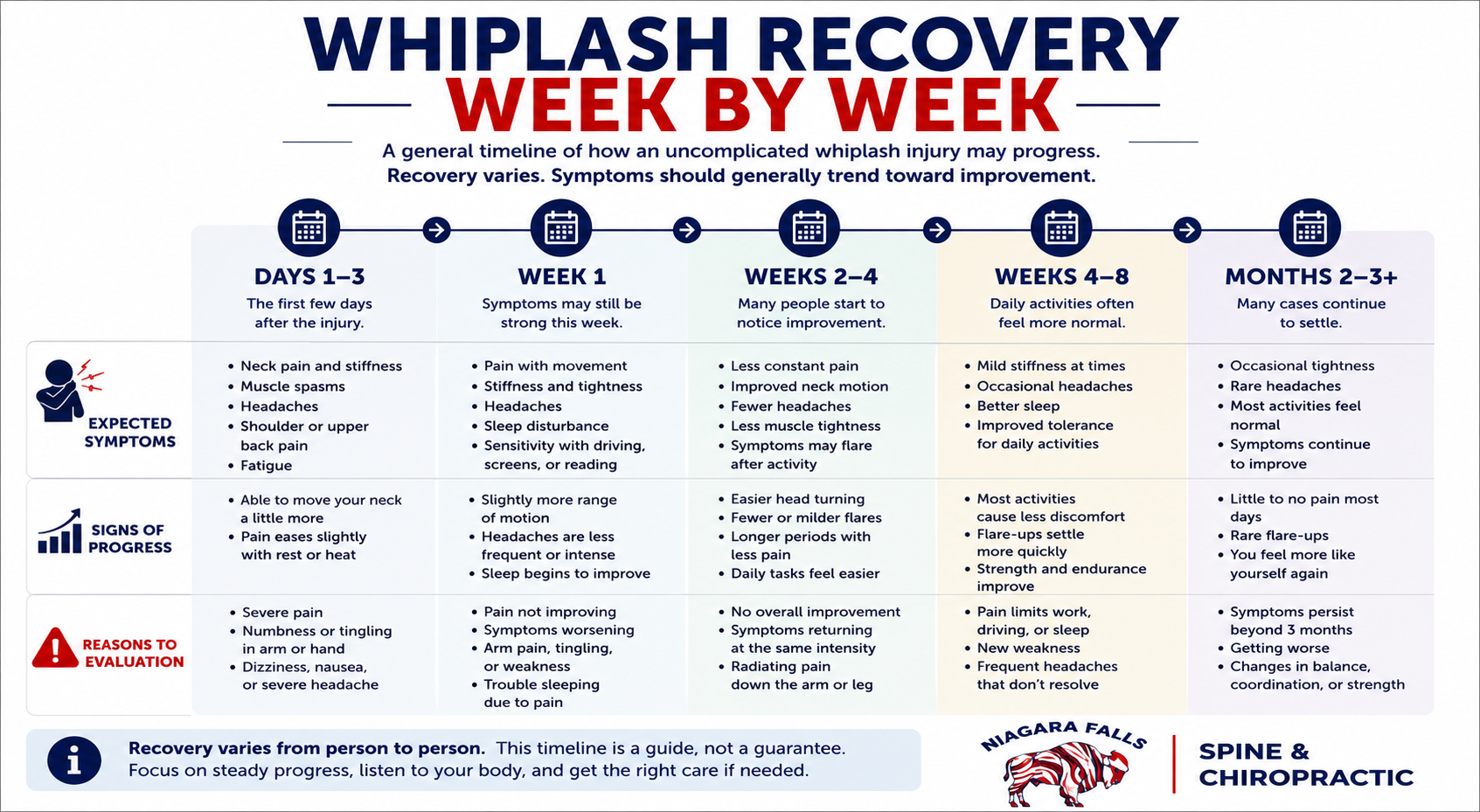
During the first few days, you may notice:
Pain may feel worse on the day after the accident because inflammation and muscle guarding can develop over several hours.
Gentle movement is often better than keeping the neck completely still. Long periods of immobilization may contribute to stiffness and slower recovery unless a healthcare professional has told you otherwise.
By the end of the first week, symptoms may remain strong, especially when:
You may start to regain some motion even if the area still feels sore. Small improvements, such as easier head turning or fewer headaches, can be signs that recovery is moving in the right direction.
Pain that continues through the first week does not automatically mean that the injury is permanent.
Many people begin to notice clearer progress during the next few weeks.
You may experience:
Symptoms may still flare after driving, sitting, exercising, or doing more than usual. Recovery is not always a straight line. A difficult day does not necessarily mean that you reinjured your neck.
By this stage, a mild or moderate injury may interfere less with work, sleep, driving, and exercise.
Some stiffness may remain at the end of the day. You may also notice discomfort after holding your head in one position for too long.
If pain is not improving at all, keeps returning at the same intensity, or begins spreading into an arm, it may be time for another evaluation.
A large portion of whiplash injuries improve within this period. You may feel mostly normal but still have occasional tightness, headaches, or sensitivity after demanding activity.
Symptoms that are gradually becoming less frequent and less intense usually suggest progress.
Symptoms that remain severe, continue to limit daily life, or worsen after several weeks deserve further attention.
Whiplash symptoms that last beyond three months may be described as persistent or chronic whiplash-associated symptoms.
These may include:
Persistent pain does not always mean that serious structural damage occurred. Recovery can be affected by injury severity, nerve involvement, sleep disruption, stress, previous neck problems, and how quickly normal movement returns.
Whiplash does not feel the same for everyone.
Common symptoms include:
Some people also experience:
Symptoms such as dizziness, confusion, nausea, memory trouble, or sensitivity to light may also occur with a concussion. Whiplash and concussion can happen during the same accident, even when the head did not directly strike an object.
Adrenaline and stress can mask pain immediately after a crash. Inflammation, muscle tension, and joint stiffness may then increase over the next several hours.
This delayed pattern is common. Delayed pain is one reason not to judge an injury only by how you feel at the accident scene.
Higher-speed impacts may place more stress on the muscles, ligaments, joints, discs, and nerves of the neck. However, vehicle damage alone does not show exactly how much someone was injured.
Strong early pain, limited motion, numbness, or weakness may point to a more involved injury and a longer recovery.
Arthritis, disc degeneration, old injuries, headaches, or chronic muscle tension may affect how the neck responds after an accident.
A short period of modified activity may help. Staying inactive or keeping the neck still for too long can contribute to weakness and stiffness. A gradual return to normal movement is often encouraged when it is safe.
Heavy lifting, intense exercise, or long drives may aggravate healing tissue. The goal is usually gradual activity, not complete rest or immediately pushing through severe pain.
Pain can make sleep difficult, while poor sleep can make pain feel stronger. Finding a supportive sleep position and addressing nighttime discomfort may help the recovery process.
Recovery often appears as small changes rather than the pain disappearing all at once.
Possible signs of improvement include:
The overall trend matters more than any single day.
Consider an evaluation when:
An exam can help determine whether symptoms appear to involve soft tissue, joints, discs, nerves, or another condition.
Seek urgent medical care after a neck injury if you develop:
These symptoms may point to a spinal injury, brain injury, or another condition that requires prompt medical assessment.
Treatment depends on the severity of the injury and the symptoms involved.
A care plan may include:
Most uncomplicated cases do not require surgery.
Gradual movement can help reduce stiffness and restore normal function. Exercises should remain controlled and should not cause severe or spreading symptoms.
Cold may help during an early pain flare. Heat may help tight or guarded muscles feel more relaxed. Some people respond better to one than the other.
A medical professional or pharmacist can advise whether a pain reliever is appropriate based on your health, prescriptions, and medical history.
After fractures, instability, concussion, and other urgent injuries have been considered, conservative care may help address joint stiffness, reduced movement, and surrounding muscle tension.
Depending on the examination, care may involve manual therapy, gentle spinal manipulation, soft-tissue techniques, or exercises designed to restore comfortable movement.
Treatment should match the stage and severity of the injury. Not every person with whiplash needs the same techniques.
Soft collars were once used routinely for whiplash. Keeping the neck immobilized for long periods may reduce muscle strength and slow recovery.
A healthcare professional may still recommend short-term use in certain situations, but the duration should be individualized. Do not begin wearing a collar for days or weeks without medical guidance.
Whiplash can sometimes irritate a cervical nerve root. This may happen because of inflammation, joint irritation, a disc injury, or reduced space around the nerve.
Possible nerve-related symptoms include:
These symptoms may overlap with a pinched nerve or herniated disc. An examination can help identify the likely source.
Yes. Whiplash headaches often begin near the base of the skull and may spread toward the forehead, temple, or behind the eyes.
They may be related to:
A new or worsening headache after trauma should be taken seriously, especially when accompanied by vomiting, confusion, dizziness, fainting, or unusual drowsiness.
Many people can continue working with temporary changes.
Helpful adjustments may include:
Complete inactivity is rarely the long-term goal. The better approach is often to remain active within a tolerable range while avoiding activities that cause a major symptom increase.
A mild injury may improve within a few days, but many people need several weeks. Symptoms should generally become less intense and less limiting over time.
Yes. Symptoms may take several hours to develop, so pain and stiffness can feel stronger the following morning.
Yes. More significant injuries may take several months to improve. Some people develop persistent symptoms that last longer.
Recovery may be affected by injury severity, poor sleep, nerve irritation, previous neck problems, limited movement, or returning to demanding activity too quickly. A lack of improvement may also mean that the original injury needs another evaluation.
Gentle movement is often encouraged, but the right level depends on the injury. Avoid exercises that cause severe pain, dizziness, weakness, or symptoms that travel into an arm.
An X-ray can show bones, alignment, arthritis, and some fractures. It does not clearly show most muscle or ligament strains. Imaging may be ordered when the examination suggests a fracture, disc injury, nerve problem, or another condition.
Seek urgent care for severe or worsening pain, weakness, trouble walking, confusion, repeated vomiting, fainting, loss of bladder or bowel control, or difficulty staying awake.
Chiropractic care may be one part of conservative treatment after serious injuries have been ruled out. The approach may include gentle joint treatment, manual therapy, exercises, and movement guidance based on the examination.
Whiplash does not follow one exact schedule. Mild cases may improve within days or weeks. Other injuries need two to three months or longer.
What matters most is whether your movement, pain, sleep, headaches, and daily function are trending in the right direction.
If your neck pain started after an accident, symptoms are not improving, or you are unsure what was injured, schedule an evaluation with Niagara Falls Spine & Chiropractic.



Niagara Falls Spine & Chiropractic
716-205-8089 • 2303 Pine Ave, Niagara Falls, NY 14301