Call US TODAY - 716-205-8089
Many people expect back pain from lifting heavy objects. Fewer people expect it from standing still.
Standing on concrete floors for hours can place stress on the lower back, hips, knees, and legs. Over time, that strain may contribute to sciatica.
This is common for people who work long shifts in Niagara Falls and Western New York. Factory workers, warehouse staff, casino workers, retail workers, healthcare workers, and hospitality staff may all deal with this type of pain.
For some people, symptoms build slowly. Others notice pain after one long shift.
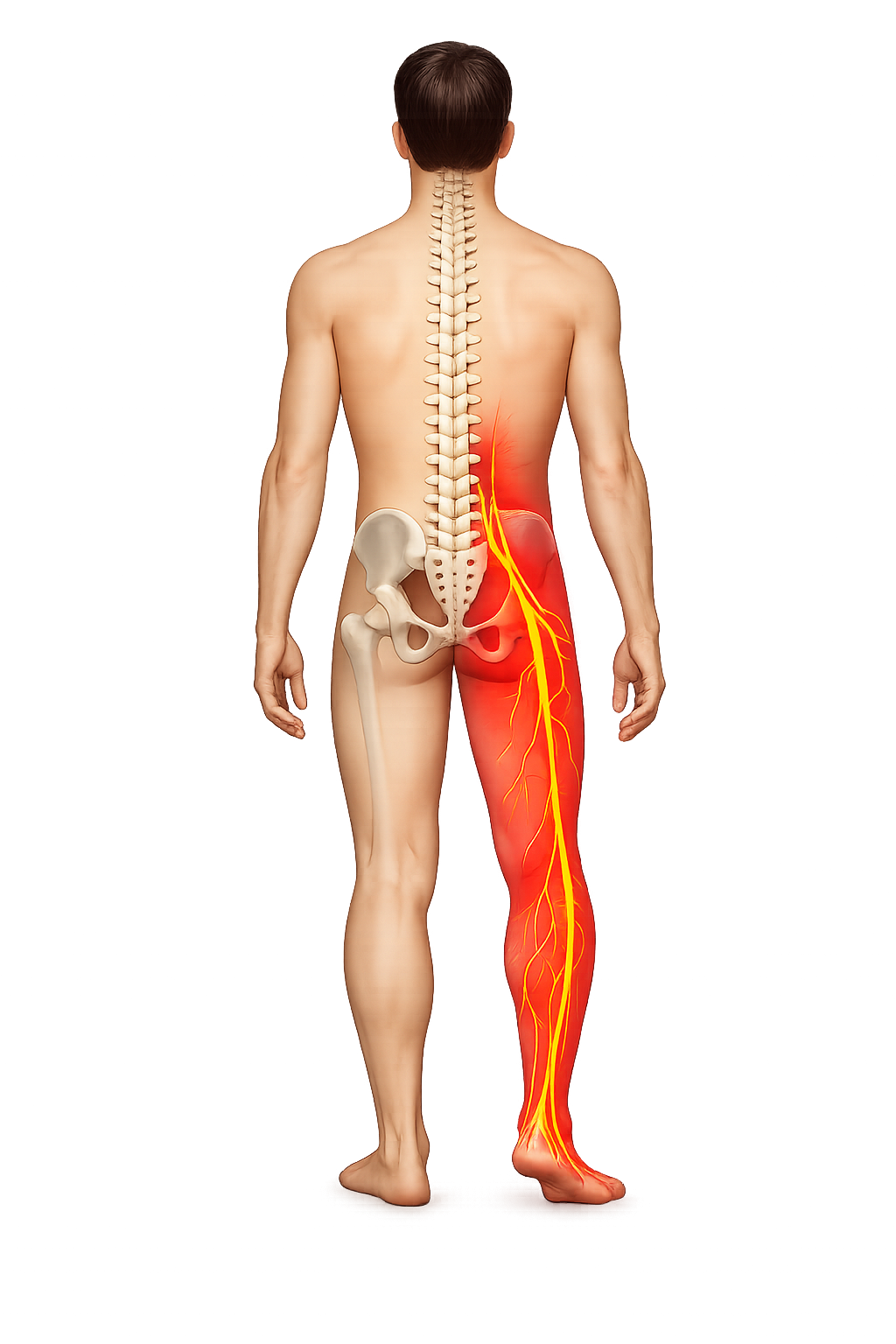
Sciatica refers to irritation of the sciatic nerve.
The sciatic nerve starts in the lower spine. It travels through the hips and buttocks, then down the leg. When this nerve becomes irritated or compressed, pain may follow that path.
Sciatica may feel like ordinary back pain at first. But it often includes leg pain, tingling, numbness, or burning.

Concrete does not absorb impact well.
When you stand on a hard surface, the body has to manage pressure through the feet, knees, hips, and lower back. If you stand for long periods, the muscles around the lower spine and hips may tighten.
This can increase strain around the pelvis and lower back. In some cases, it may also aggravate a herniated disc or place more pressure near a nerve.
Workers often notice symptoms near the end of a shift. Some feel worse after sitting down once the shift is over.
Sciatica can feel different from person to person.
Common symptoms include:
Some people feel symptoms only once in a while. Others feel them most days.

Sciatica often affects one side of the body more than the other.
This can happen when one side of the lower back, hip, or pelvis has more strain. It can also happen when one side has more nerve irritation.
Standing habits may play a role. Many people shift weight onto one leg during long shifts. Over time, that can increase uneven pressure through the lower back and hips.
Small changes may reduce daily strain.
These may include:
If posture and movement patterns are part of the issue, postural correction therapy may help support better mechanics during the workday.
It may help to seek an evaluation if:
Nerve symptoms should not be ignored if they continue or get worse.
If your symptoms are similar to pain that gets worse from sitting, you may also find this helpful: Why Sitting All Day Can Trigger Sciatica.
Care depends on what is causing the pain.
Some people need work focused on lower back mobility. Others need help with hip tension, posture, or nerve irritation.
Depending on the exam findings, care may include spinal manipulation, soft tissue work, movement guidance, or other therapies.
The goal is to reduce strain, improve movement, and help the body handle daily work demands with less pain.
Select any symptoms you are experiencing. This is not a diagnosis, but it may help you understand whether your symptoms follow a common sciatica pattern.
At Niagara Falls Spine & Chiro, we evaluate lower back pain, nerve irritation, and movement problems related to sciatica.
If standing on concrete floors has started to affect your workday, it may help to find out what is causing the pain.



Niagara Falls Spine & Chiropractic
716-205-8089 • 2303 Pine Ave, Niagara Falls, NY 14301